
THE CHALLENGE
Compliance auditors spend a day or two inside a pharmaceutical facility with a pen and paper, because electronics are not allowed on the floor. Everything they observe goes into handwritten notes, and only later, back at a desk, does it get transcribed into spreadsheets and Word templates and assembled, section by section, into a formal client report. That assembly alone could run up to fifteen hours per audit. The expertise was never the bottleneck. The paperwork was.
WHAT WE DID
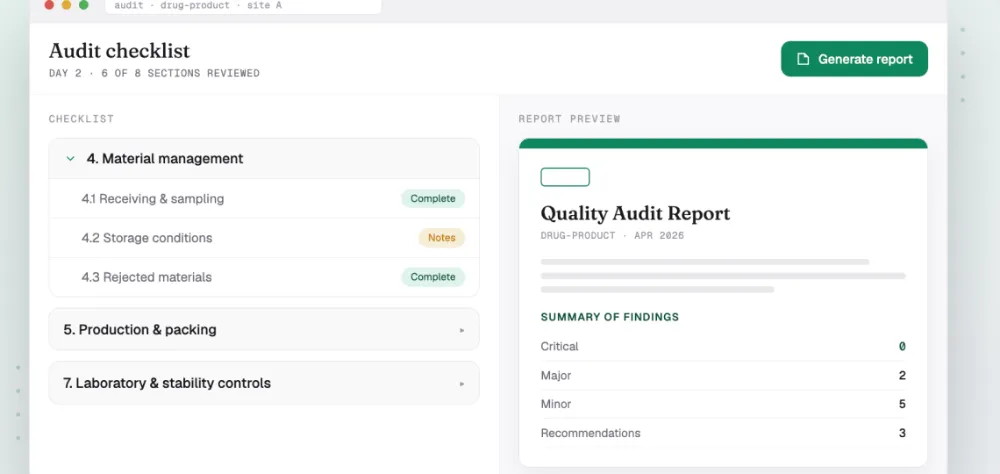
We built a structured web tool that carries an audit from checklist to finished report. Auditors work through the regulatory sections, recording notes, the procedures they reviewed, open questions, and observations under each one, and can mark a question resolved or promote it into a formal finding. Two auditors can work the same audit at once, in real time, the way they actually split a site visit. Observations flow straight into a wrap-up summary for the verbal close-out, and the detailed report generates as a Word document with the client logo, address, and regulatory references already in place. Every change lands in an audit trail, which for regulated work is not optional.
WHAT THEY GOT
The hours that used to go into reassembling handwritten notes now go into the audit itself. The report is built as the auditor works rather than stitched together afterward, so what once took the better part of two working days to compile comes out of the tool already formatted. Nothing about the auditor’s judgment changed. The tool just stopped making them pay for that judgment twice.
The value
For a consulting practice, billable hours spent formatting Word documents are hours not spent auditing. The tool turns report writing from a fifteen-hour afterthought into a by-product of work already done, keeps clients, facilities, and audits in one place instead of scattered files, and leaves a complete trail behind every report. The practice can take on more audits without the reporting backlog growing alongside them.
- Checklist, notes, questions, and findings captured in one place, by regulatory section.
- A branded, referenced Word report generated from that data, not assembled by hand.
- Two auditors on one audit in real time, with a full audit trail behind every change.
“We used to walk out of a facility with a notebook and lose the next two days turning it into a report. Now the report is all but written by the time the audit ends. It gave us back the part of the week we dreaded.”
– Lead Auditor, GxP consulting practice